One of my favorite questions to ask a marketing team is what happens after the lead. Sometimes that question produces a very long silence. There may be beautiful dashboards showing impressions, downloads, MQLs and campaign responses. But somewhere between the MQL and revenue, marketing visibility disappears.
At Meru Networks, we built a much tighter connection between marketing activity, sales conversations, opportunities and pipeline. The result was a demand engine where the scoreboard wasn’t simply lead volume. It was pipeline.
Start with the sales conversation
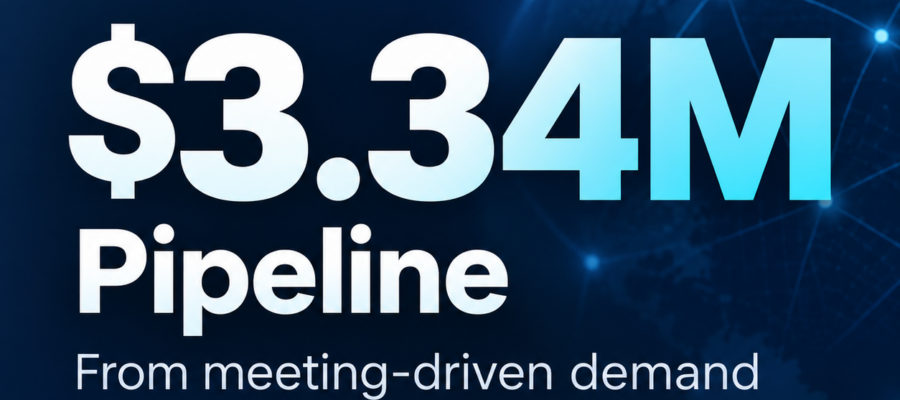
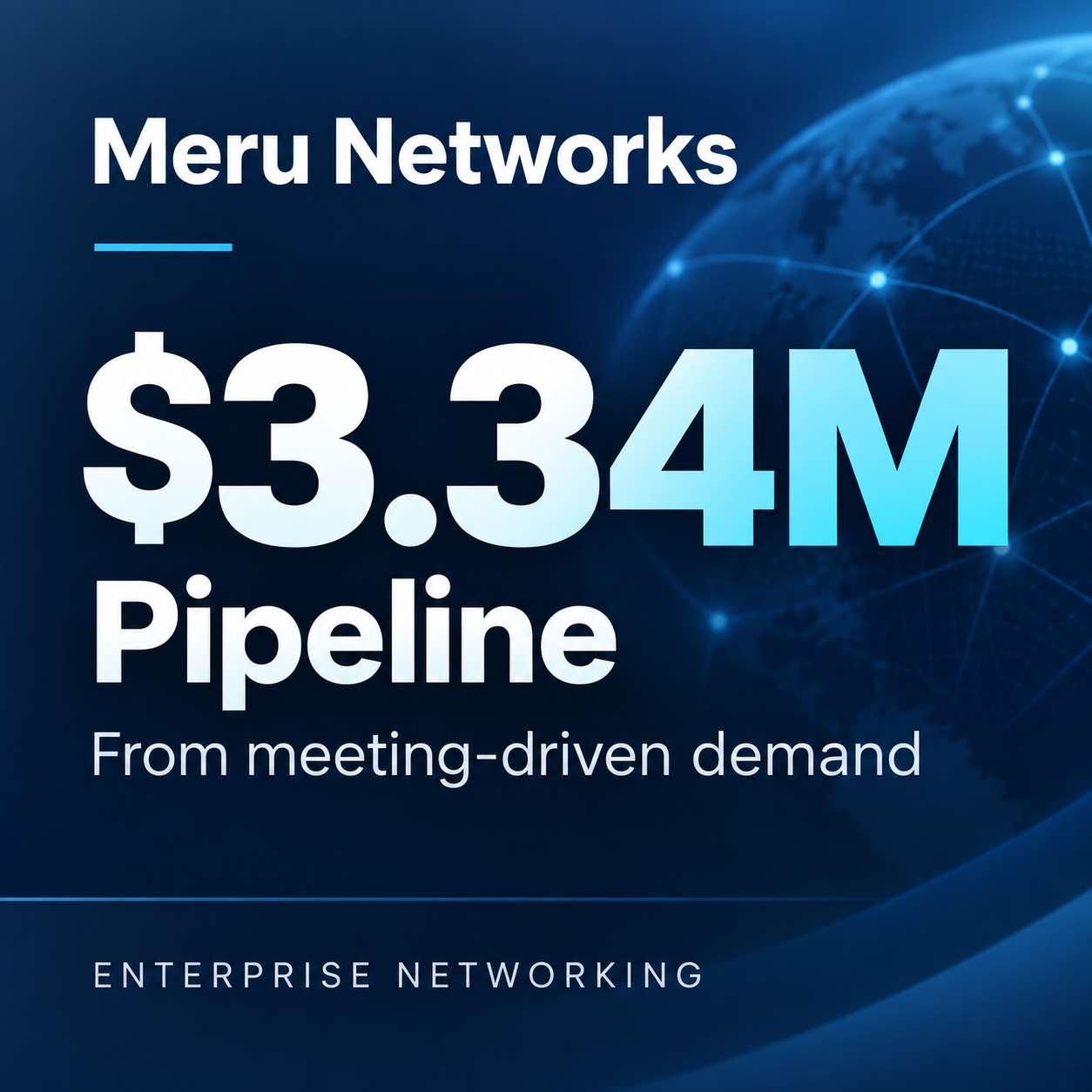
The model centered heavily around appointment generation. During the reporting period, the annual appointment program produced 327 appointments set, 297 appointments completed, 80 opportunities, a 27% appointment-to-opportunity conversion rate, and approximately $3.34 million in pipeline from appointments.
That is a much more useful operating system than saying we generated 327 leads. An appointment represents movement. An opportunity represents even more movement. Pipeline gives marketing and sales a common scoreboard.
Marketing still had to create the demand
This wasn’t simply an SDR program. Behind those conversations was an integrated demand engine: web campaigns, paid search, webinars, email, content syndication, Meeting Maker campaigns, inbound programs, social, events and nurturing.
The marketing reporting also showed significant digital momentum, including a 60% increase in unique visitors year over year and a 630% increase in form submissions compared with Q2 2013. But here’s the important part. Those metrics didn’t live by themselves. They connected into an operating dashboard that tracked appointments, MQLs and SQLs, opportunities and pipeline.
That’s the difference between campaign reporting and revenue marketing.
Orchestrate the routes
This maps closely to the Orchestrate stage of my Growth Framework. It also reminds me of my Walking the Dogs episode about choosing the right route.
When I walk Dusty and Tanner, there are a dozen directions we could go: the park, the neighborhood loop, the trail, or the route where Tanner suddenly decides every squirrel deserves a 10-minute strategic review. Marketing teams do exactly the same thing. Paid search, webinars, ABM, events, social and content all sound strategically reasonable when you look at them one at a time.
The question isn’t whether any one of those tactics is good. The question is whether the routes connect. At Meru, the operating model connected marketing routes to one destination: qualified sales conversations and pipeline.
The dashboard should change behavior
One thing I still believe strongly today is that a useful dashboard isn’t something the CMO presents once a quarter. It should change what the team does Monday morning.
Meru’s reporting tracked appointments set, scheduled and completed, opportunity creation, MQLs and SQLs, pipeline and appointment disposition. That meant marketing could see not only volume but downstream quality. Sales could see where pipeline originated. And leadership could see whether marketing activity was creating movement.
The lesson I still use today
If your marketing dashboard ends at MQL, it ends too early. For enterprise B2B marketing, I want to understand whether we created engagement, whether engagement produced a conversation, whether that conversation became an opportunity, whether the opportunity moved, and whether it produced revenue.
That’s why my Growth Framework treats growth as a company operating problem rather than a marketing department problem. Marketing may create the signal. Sales may carry the conversation. But the customer doesn’t care which department receives credit. They’re walking one buying journey. We should be measuring the same journey.
Growth Framework connection: Orchestrate -> Work the Plan -> Tune.
Walking the Dogs connection: Choosing the Right Route: Which GTM Motions Actually Matter.
These posts are part of the Growth in Practice series.
These five cases span very different companies, markets and stages of growth. But the pattern is remarkably consistent. Gauge reality. Reframe the market and goal. Orchestrate the buying journey. Work the Plan. Tune to market behavior. Harvest what works into a repeatable growth system. That is my G-R-O-W-T-H Framework.