A lot of companies ask the wrong growth question. They ask how much they should spend on marketing. The better question is what happens economically when they acquire another customer. That distinction became very real in my work with GoGrid, an early cloud infrastructure company operating in an increasingly competitive market.
GoGrid was generating demand, but the bigger strategic challenge was understanding which marketing investments actually created long-term economic value. The problem wasn’t a shortage of campaign data. It was connecting that data to the economics of the customer.

The shift from campaign reporting to growth economics
We stepped back from individual campaigns and looked at three years of customer behavior. Customers were segmented into five monthly recurring revenue tiers. We evaluated customer tenure, second-month billings and acquisition economics, and built a predictive model based on second-month billings x average tenure x customer volume.
That changed the conversation. Instead of simply asking which channel generated the most leads, we could ask which types of customers recovered their acquisition costs fastest, which segments stayed longer, and which marketing investments were economically scalable.
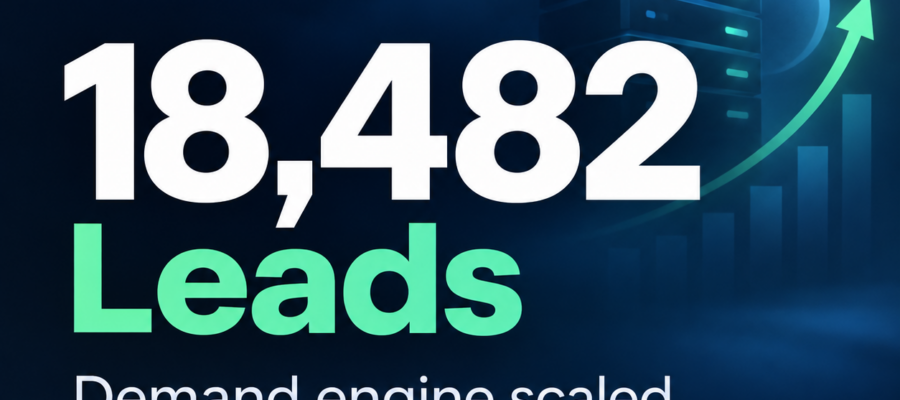
The analysis showed an average CAC payback window of approximately 5.1 months of second-month billing revenue and a projected historical rate of return of 40.8% on lead-generation investment. During the 2012 year-to-date period captured in the case study, GoGrid had also generated 18,482 raw leads at a $43.93 cost per lead.
Those numbers mattered. But the bigger lesson was what the numbers allowed leadership to do next.
This is what I now call Gauge
The first stage of my G-R-O-W-T-H Framework is Gauge. Gauge isn’t simply building a dashboard. It is figuring out what is really happening underneath the dashboard.
At GoGrid, that meant going beyond traffic, clicks, lead volume and cost per lead. Those metrics tell you what happened. They don’t necessarily tell you whether you should spend another dollar. CAC payback and customer lifetime value change that.
Suddenly marketing becomes an investment portfolio. You can ask where the next dollar should go, which segments deserve additional investment, where you are acquiring customers who never become economically attractive, and which programs look expensive at the top of the funnel but create more valuable customers.
The $3 million question
Once the economics were visible, the business could model additional investment. The case study proposed an incremental $3 million annual marketing investment, allocated across SEM, SEO, content partnerships, developer communities and B2B digital channels.
Importantly, the projected customer and billing outcomes in that model were forecasts, not realized results. That distinction matters. A good growth leader doesn’t confuse the model with the outcome. The model creates a hypothesis. The operating plan tests it.
What I would tell a SaaS CEO today
If growth has slowed, adding campaigns is rarely my first move. I want to know what it costs to create a customer, how quickly we recover that investment, how customer value differs by ICP, segment and acquisition source, which channels create customers rather than activity, and where capital is being trapped in an inefficient funnel.
This is why Gauge comes first in my Growth Framework. Before choosing a new route, you need to know where you actually are. Otherwise, you’re just spending more money to get lost faster.
Growth Framework connection: Gauge -> Work the Plan -> Harvest.
Walking the Dogs connection: Before picking the route, understand the terrain and what a successful walk actually looks like.
These posts are part of the Growth in Practice series.
These five cases span very different companies, markets and stages of growth. But the pattern is remarkably consistent. Gauge reality. Reframe the market and goal. Orchestrate the buying journey. Work the Plan. Tune to market behavior. Harvest what works into a repeatable growth system. That is my G-R-O-W-T-H Framework.