How the Gauge Stage of the Growth Framework Exposes Broken Handoffs, Accelerates the Path to SAM, and Builds One Revenue Team
Most companies will tell you their revenue teams are aligned.
Marketing and Sales attend the same meetings. Everyone works inside the same CRM. Leadership reviews a shared dashboard. There is a revenue Slack channel, a quarterly planning process, and perhaps even an annual kickoff where everyone wears the same company T-shirt.
Yet Marketing, Sales, Product, and Customer Success may still be running completely different plays.
Marketing can hit its lead target while the company misses its revenue target.
Sales can hit its activity target while pipeline quality deteriorates.
Customer Success can hit its onboarding target while customers fail to meaningfully adopt the product.
Product can ship new capabilities while buyers remain unclear about why those capabilities matter.
Everyone can appear successful within their own dashboard while the overall revenue system fails.
That is not simply a communication problem.
It is not even primarily an alignment problem.
It is an operating-model problem.
This is one of the issues the Gauge stage of the Growth Framework is designed to uncover.
Watch it on YouTube here:
Gauge the Revenue System You Actually Have
Gauge is the diagnostic stage of the Growth Framework.
It is where you examine how growth happens today, not how the organization chart suggests it happens, how the annual plan says it should happen, or how leaders hope it happens.
You follow the real customer journey.
You trace what happens from the first sign of buyer interest through evaluation, purchase, onboarding, adoption, retention, and expansion.
You look at the people, processes, data, technology, spending, metrics, and decisions that move the customer forward.
Most importantly, you identify where the journey changes hands without a clear owner, trigger, service expectation, or next action.
These transition points are where a surprising amount of revenue leaks out of the system.
A buyer responds to a campaign, but Sales does not know why the account engaged.
A prospect enters a trial, but nobody owns activation.
A customer signs a contract, but Customer Success does not know what outcomes Sales promised.
A user adopts one capability, but nobody recognizes the expansion signal.
The customer is passed from team to team, often being asked to explain the same problem again at every stage.
The company calls this a funnel.
The customer experiences it as organizational confusion.
Getting to SAM Requires More Than Identifying a Market
Companies love talking about TAM, the total addressable market.
TAM is exciting. It is large, ambitious, and looks impressive in an investor presentation.
But growth does not come from addressing everyone who could theoretically buy.
Growth comes from building an effective revenue motion for the customers you can realistically reach, serve, and win.
That is your serviceable available market, or SAM.
Getting to SAM quickly is not just a market-sizing exercise. It is an operating decision.
You must choose a meaningful customer segment, understand the problem that creates urgency, and coordinate the plays required to move that segment through the entire customer journey.
A company does not operationalize its SAM by creating a larger account list.
It operationalizes its SAM by answering a more difficult set of questions:
Who exactly are we trying to move?
What problem are they experiencing?
What makes the problem urgent now?
Which Marketing, Sales, Product, onboarding, and Customer Success plays will move them forward?
Who owns each stage?
What must happen before ownership changes?
What signals indicate that the customer is ready for the next action?
This is where the concept of One Revenue Team™ becomes practical.
The Walk Only Works When Everyone Knows the Destination
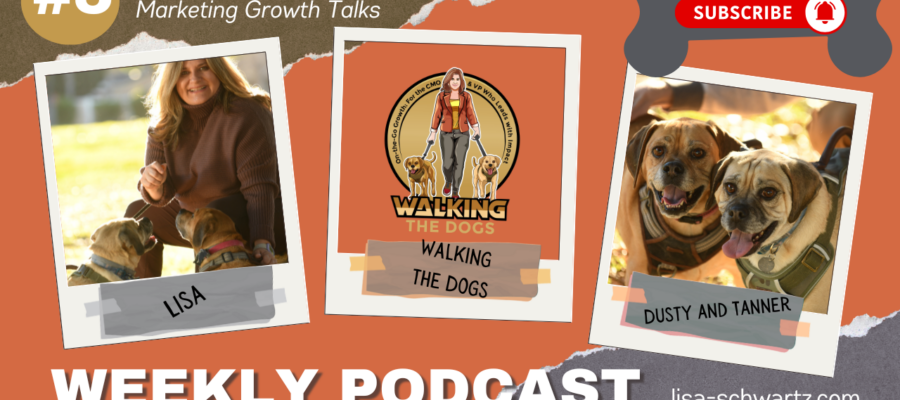
Walking Dusty and Tanner often provides a useful model for what happens inside a revenue organization.
Dusty may decide that the destination is the park.
Tanner may become convinced that the most important opportunity is hiding behind a hedge.
I am attempting to keep all three of us moving in one general direction.
The walk does not work if one person is heading toward the park, another is walking back toward home, and nobody agrees on who is holding which leash.
Before the walk begins, we need a destination.
We need a route.
We need to know who is holding each leash.
We need to know when we can stop.
We need to know what happens when one of the dogs suddenly pulls in another direction.
Ultimately, we need to know how everyone gets home together.
A revenue organization needs the same operating clarity.
Marketing, Sales, Product, and Customer Success do not need to perform the same job. They do need to understand how their different responsibilities move the same customer toward the same business outcome.
That is the foundation of One Revenue Team.
Build a One Revenue Team Journey Map
The fastest way to determine whether your revenue organization is running one coordinated play is to build a One Revenue Team journey map.
Do not begin with your entire market.
Choose one strategically important customer segment.
This could be:
- Enterprise accounts in a specific industry
- Midmarket companies adopting a product-led offer
- Existing customers using only one product
- Accounts showing a specific operational or organizational trigger
- Customers with strong adoption potential but low current usage
Starting with one segment forces the organization to make real choices.
1. Define the Growth Objective
Begin with the business outcome.
What are you trying to accomplish with this segment?
The objective might be to:
- Generate new enterprise customers
- Increase qualified pipeline
- Improve product activation
- Accelerate time to first value
- Increase adoption
- Reduce churn
- Create expansion pipeline
- Grow revenue within existing accounts
Avoid vague objectives such as increasing awareness or improving engagement.
Those may be useful intermediate measures, but they are not the destination.
The growth objective should be specific enough to guide decisions across every revenue function.
2. Identify the Accounts and Buyers
Who exactly are you trying to move?
Document the types of accounts, industries, business models, maturity levels, technologies, and organizational characteristics that make a company a strong fit.
Then identify the buying group.
Who experiences the problem?
Who evaluates the solution?
Who controls the budget?
Who could block the decision?
Who will be accountable for implementation and outcomes?
A revenue motion becomes much more effective when every function is working from the same definition of the customer.
3. Define the Problem and Trigger
A target account is not necessarily a ready account.
The organization also needs to understand what makes the problem urgent.
A buyer who downloads a report may be exploring a topic.
An account experiencing a major operational failure, leadership change, contract renewal, new strategic mandate, acquisition, regulatory deadline, or capacity constraint is in a very different situation.
Interest is not intent.
Activity is not readiness.
The journey map should identify the observable conditions that suggest the account is ready for a different conversation or action.
4. Map the Marketing Play
For each journey stage, define Marketing’s role.
Marketing may need to:
- Create awareness of an overlooked problem
- Reframe how the buyer understands the problem
- Capture existing demand
- Educate multiple members of the buying group
- Build confidence in a new approach
- Support account-based engagement
- Provide proof through customer stories
- Nurture buyers who are not ready for a sales conversation
- Re-engage stalled accounts
The Marketing play should be connected to the customer’s stage, problem, and trigger.
Producing content and generating leads are activities. The real question is how those activities help move the customer toward the business objective.
5. Map the Sales Play
Next, define what Sales should do and when.
What signal warrants human outreach?
What context should Sales receive?
Which buyer should be contacted?
What conversation should be initiated?
What evidence should indicate that an opportunity is progressing?
Sales should not simply receive a name, email address, and lead score.
It should receive the context necessary to understand why the account may be ready for a conversation.
Without that context, Sales is forced to restart the discovery process, and the customer experiences another disconnected handoff.
6. Define the First Value Milestone
A signed contract is not the end of the customer journey.
It is the beginning of the value journey.
Product and onboarding teams need to define the first moment when the customer can credibly say, “This is working.”
That is not necessarily the first login, implementation meeting, training session, or completed setup checklist.
The first value milestone is the first meaningful proof that the customer is beginning to receive the outcome they purchased.
It might be:
- A measurable reduction in manual work
- The first successful automated workflow
- The first qualified opportunity generated
- The first completed analysis
- The first operational issue detected
- The first team actively using the product
- The first financial or performance improvement
If the first value milestone is unclear, onboarding becomes a sequence of activities rather than a path to an outcome.
7. Map Adoption, Retention, and Expansion
Customer Success should know how to move the customer from first value to sustained adoption.
What behaviors indicate that the product is becoming embedded?
What usage patterns indicate risk?
What outcomes should be reviewed?
What additional education, support, or intervention may be required?
The journey map should also identify expansion signals.
These may include:
- Increasing product usage
- Additional users or teams entering the product
- New business units showing interest
- A customer approaching a capacity threshold
- New organizational initiatives
- Additional intent signals from elsewhere in the account
- Successful adoption of an initial use case
- New problems that the product can solve
Expansion should not depend solely on a calendar reminder telling an account manager to check in.
It should respond to real customer and account signals.
The Revenue Plays Are Connected
Demand generation creates and captures interest.
Account-based marketing concentrates resources around priority accounts.
Sales turns meaningful engagement into buying conversations.
Product and onboarding create the first value milestone.
Customer Success drives adoption, retention, and measurable outcomes.
Expansion plays respond to usage, organizational, and intent signals.
These are not separate funnels.
They are connected parts of one customer journey.
The problem is that most companies manage them as separate departmental processes.
Marketing says, “We delivered the lead.”
Sales says, “The lead was not qualified.”
Customer Success says, “We were not involved in what was promised.”
Product says, “Nobody told us that capability was critical.”
The customer is left in the middle, trying to understand why each new interaction feels like the beginning of a different conversation.
Define the Handoffs Before They Fail
For every stage in the journey map, document five operating requirements.
Owner
Who is accountable for moving the customer through this stage?
Several teams may contribute, but one owner should be responsible for the result.
Handoff Condition
What must be true before ownership changes?
A form submission is usually not enough.
A lead score may not be enough.
A completed contract is not enough to ensure that the customer is prepared for onboarding.
The handoff condition should reflect customer readiness, not simply completion of an internal activity.
Service-Level Expectation
How quickly must the next team act?
What response time is appropriate for the customer’s level of urgency?
Which information must travel with the customer?
A service-level agreement is not just a speed commitment. It should also define the quality and completeness of the handoff.
Primary Metric
What measure indicates that the customer successfully moved through the stage?
This might be a buying-group conversation, accepted opportunity, activated account, first value milestone, adoption threshold, renewal, or expansion event.
The metric should measure progress toward the growth objective, not merely departmental activity.
Next-Best Action
What happens when the customer does not follow the expected path?
Customers do not move neatly from left to right.
They pause.
They revisit earlier questions.
They invite new stakeholders.
They disappear and return.
They start a trial and never activate.
They adopt a different use case than the company expected.
A real operating model needs to account for those behaviors.
Alignment Is a Series of Operating Decisions
During a walk, Tanner may stop pulling toward the hedge and catch up with Dusty.
That does not happen because I announce that we are aligned.
It happens because I adjust the route, shorten one leash, allow a moment to investigate, and then get everyone moving toward the same destination.
Revenue alignment works the same way.
It is not a declaration.
It is a series of operating decisions:
- Shared growth objectives
- Defined customer segments
- Clear functional roles
- Visible customer and account signals
- Explicit handoff conditions
- Agreed service levels
- Consistent information transfer
- A clear next action when the customer behaves unexpectedly
The shared meeting and dashboard may support alignment, but they do not create it.
The operating model creates it.
Walk the Revenue Dog
In one of my businesses, I asked several teammates to help think through how we could win more commercial work.
“Let’s walk the dog,” I said.
They looked puzzled.
We gathered around a large dry-erase board. The board became the dog on the leash, and we began walking the problem together.
The first city block captured what I had learned from conversations with builders and commercial designers.
The second mapped the commercial construction timeline, including the people and contractors involved.
The dog park represented the people we might need to contact and the points in the journey when those conversations should happen.
The third city block incorporated the team’s knowledge, questions, and additions.
The fourth turned the analysis into a set of specific actions.
The dog did not return home until those actions had owners.
That is the point of walking the dog.
The purpose is not to produce a perfect diagram.
It is to make incomplete thinking visible, invite the right people to improve it, and turn the resulting insight into an owned plan.
A One Revenue Team journey map follows the same process.
Put the customer journey on the wall.
Walk it block by block.
Identify the destination, the route, the owners, the handoffs, the signals, and the next actions.
Then assign the work required to bring the dog home.
The Dog to Walk This Week
Choose one important customer segment.
Map one complete revenue journey.
Start with the growth objective.
Identify the target buyer, the problem, and the trigger.
Document the Marketing, Sales, Product, onboarding, Customer Success, and expansion plays.
Assign an owner to every stage.
Define every handoff condition.
Set the service-level expectation.
Choose the primary metric.
Identify the next-best action.
You may discover that your revenue team is not operating one coordinated journey.
Each function may be optimizing its own short stretch of sidewalk.
That is exactly what the Gauge stage is supposed to reveal.
Your revenue team is not a team simply because everyone attends the same meeting.
It becomes a team when everyone knows the destination, understands the route, owns their part of the journey, and helps the customer get all the way home.
Where does your customer journey currently change hands without a clear owner, trigger, or next step?
That may be the most important dog you walk today.